
' d='M0 0h21v15H0z'/%3E%3Cpath d='M0 0h21v1H0V0zm0 2h21v1H0V2zm0 2h21v1H0V4zm0 2h21v1H0V6zm0 2h21v1H0V8zm0 2h21v1H0v-1zm0 2h21v1H0v-1zm0 2h21v1H0v-1z' fill='url(%23b)'/%3E%3Cpath fill='url(%23c)' d='M0 0h9v7H0z'/%3E%3Cpath d='M1.5 2a.5.5 0 110-1 .5.5 0 010 1zm2 0a.5.5 0 110-1 .5.5 0 010 1zm2 0a.5.5 0 110-1 .5.5 0 010 1zm2 0a.5.5 0 110-1 .5.5 0 010 1zm-5 1a.5.5 0 110-1 .5.5 0 010 1zm2 0a.5.5 0 110-1 .5.5 0 010 1zm2 0a.5.5 0 110-1 .5.5 0 010 1zm1 1a.5.5 0 110-1 .5.5 0 010 1zm-2 0a.5.5 0 110-1 .5.5 0 010 1zm-2 0a.5.5 0 110-1 .5.5 0 010 1zm-2 0a.5.5 0 110-1 .5.5 0 010 1zm1 1a.5.5 0 110-1 .5.5 0 010 1zm2 0a.5.5 0 110-1 .5.5 0 010 1zm2 0a.5.5 0 110-1 .5.5 0 010 1zm1 1a.5.5 0 110-1 .5.5 0 010 1zm-2 0a.5.5 0 110-1 .5.5 0 010 1zm-2 0a.5.5 0 110-1 .5.5 0 010 1zm-2 0a.5.5 0 110-1 .5.5 0 010 1z' fill='url(%23a)'/%3E%3C/g%3E%3C/svg%3E)
' d='M0 0h21v15H0z'/%3E%3Cpath fill='url(%23b)' d='M10 0h11v15H10zM0 0h7v15H0z'/%3E%3Cpath fill='url(%23a)' d='M7 0h7v15H7z'/%3E%3Cpath d='M8 7a2.5 2.5 0 001.247 2.164.5.5 0 00.502-.865A1.499 1.499 0 019 7a.5.5 0 00-1 0zm3.846 2.107A2.498 2.498 0 0013 7a.5.5 0 10-1 0 1.5 1.5 0 01-.693 1.265.5.5 0 10.539.842z' fill='%23628A40' fill-rule='nonzero'/%3E%3Ccircle fill='%23DCC26D' cx='10.5' cy='7' r='1'/%3E%3C/g%3E%3C/svg%3E)
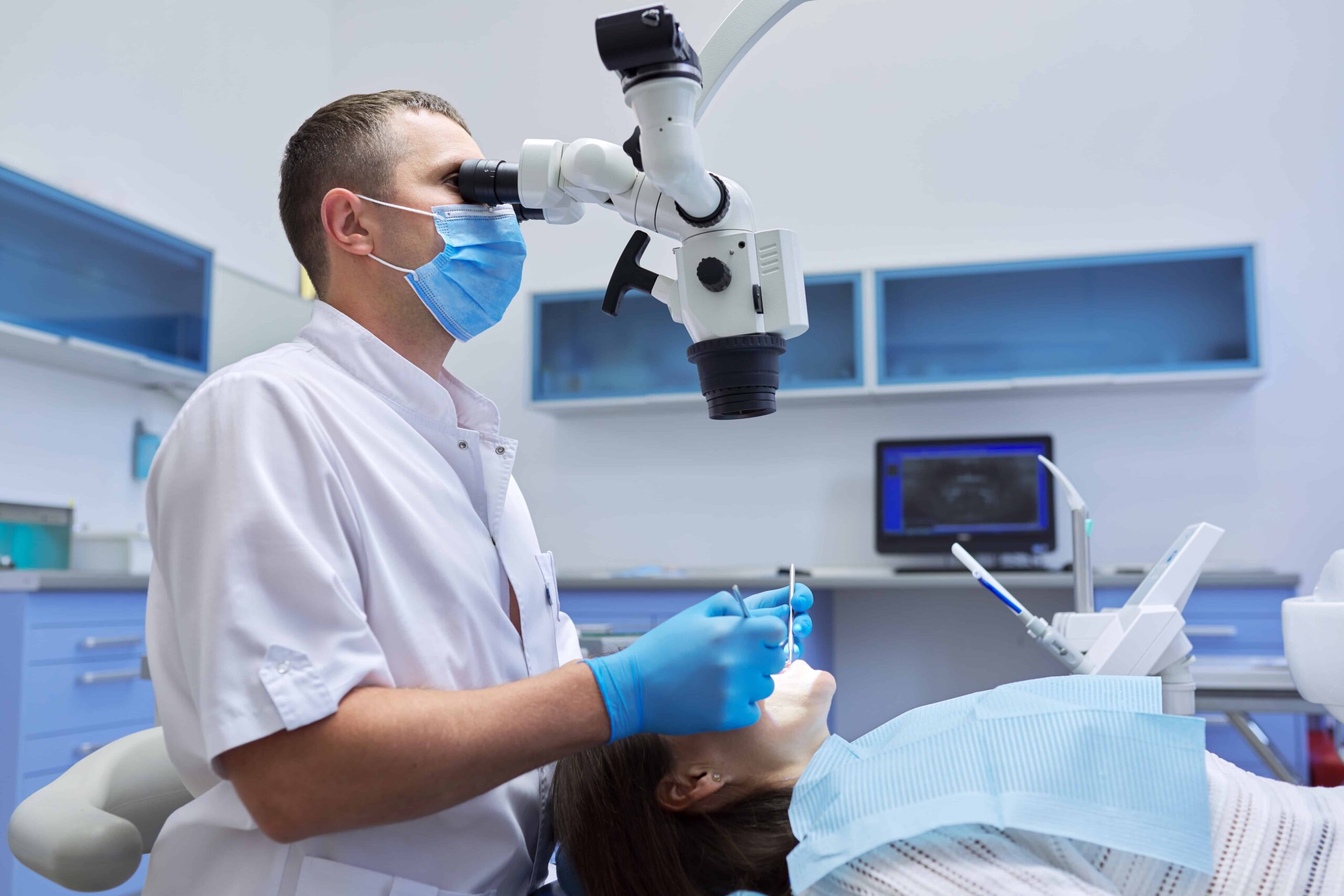
Unbearable pain? Blackened teeth? Recurrent infections? Myths about root canal treatment (endodontics) have scared many patients, but how much truth is there in them? In this article, we will debunk the most common myths and reveal the truths about this essential dental procedure.
Myths vs. Realities of Root Canal Treatment
Myth 1: Root canal treatment is extremely painful
Reality: False! Thanks to advances in anesthesia and modern techniques, root canal treatment is no more painful than a dental filling. In fact, the procedure relieves the intense pain caused by nerve infection.
Myth 2: Teeth treated with a root canal turn black
Reality: False! The darkening of the tooth is not caused by the root canal treatment itself, but by staining from old filling materials or the lack of an adequate restoration after the procedure. With current techniques and materials, the tooth can maintain its natural color. If darkening occurs, it can be corrected with dental veneers or teeth whitening.
Myth 3: Root canal treatment causes illness
Reality: False! There is no scientific evidence to support this claim. On the contrary, root canal treatment eliminates bacterial infection that can spread to other parts of the body if left untreated.
Myth 4: It is better to extract the tooth than to perform a root canal treatment
Reality: False! Whenever possible, it is preferable to preserve the natural tooth. Dental extraction can lead to bite problems, shifting of adjacent teeth, and bone loss. The root canal treatment allows the tooth to be saved and its function maintained, avoiding the subsequent need for dental implants or dental bridges.
Myth 5: Root canal treatment is very expensive
Reality: The cost of root canal treatment may vary depending on the complexity of the case and the clinic’s location, but generally, it is more economical than the extraction and subsequent replacement of the tooth with an implant or dental bridge.
When is a Root Canal Treatment Necessary?
Root canal treatment is recommended when the dental pulp (internal tissue of the tooth containing nerves and blood vessels) becomes inflamed or infected due to deep decay, trauma, or cracks in the tooth. Symptoms may include:
- Intense and persistent pain
- Sensitivity to heat or cold
- Gum inflammation
- Dental abscess
It is important to know when endodontics can no longer be performed to evaluate the available alternatives.
How is a Root Canal Treatment Performed?
Root canal treatment consists of:
1.Local Anesthesia
Anesthesia is applied to numb the area and ensure a pain-free procedure.
2.Access to the Pulp
A small opening is made in the tooth’s crown to access the pulp.
3.Cleaning and Disinfection
The infected pulp and bacteria are removed from inside the tooth.
4.Obturation
The root canals are filled with a biocompatible material to seal them.
5.Restoration
A dental crown or filling is placed to protect and strengthen the treated tooth.
Duration of Root Canal Treatment
A frequent question is how long the root canal treatment lasts. The duration may vary depending on the complexity of the case, but it is generally completed in one to three sessions.
Special Care
Treatment During Pregnancy
If you are pregnant, it is important to know the special considerations regarding root canal treatment during pregnancy.
Post-Treatment Care
After treatment, it is essential to maintain excellent oral hygiene:
- Perform regular dental cleanings
- Use quality toothpaste
- Consider electric toothbrushes for better cleaning
Subsequent Restorations
After root canal treatment, a restoration is commonly needed to protect the tooth:
- For posterior teeth: Dental crowns are generally required for greater strength.
- For anterior teeth: They may need veneers or crowns depending on the case.
- Aesthetic cases: It can be integrated into a complete smile design.
Prevention of Future Endodontic Procedures
To avoid needing root canal treatments:
- Treat cavities early with dental fillings
- Maintain good oral hygiene
- Visit the dentist regularly
- Avoid dental trauma
- Do not use teeth as tools
Advanced Technology at iSmile
At iSmile Guatemala, we use cutting-edge technology for precise diagnoses, including intraoral scanning that allows for greater precision in treatment.
Looking for an Endodontic Specialist in Guatemala?
If you need a root canal treatment, it is essential to visit an endodontist, a specialist in this type of procedure. At iSmile Guatemala, we have highly trained endodontists and cutting-edge technology to provide you with a safe, effective, and pain-free treatment.
We also help you find the best dentist according to your specific needs.
Don’t Let the Myths Scare You! Schedule Your Appointment Today
If you have any questions or concerns about root canal treatment, do not hesitate to contact us. We are here to help you keep your smile healthy and radiant!