
' d='M0 0h21v15H0z'/%3E%3Cpath d='M0 0h21v1H0V0zm0 2h21v1H0V2zm0 2h21v1H0V4zm0 2h21v1H0V6zm0 2h21v1H0V8zm0 2h21v1H0v-1zm0 2h21v1H0v-1zm0 2h21v1H0v-1z' fill='url(%23b)'/%3E%3Cpath fill='url(%23c)' d='M0 0h9v7H0z'/%3E%3Cpath d='M1.5 2a.5.5 0 110-1 .5.5 0 010 1zm2 0a.5.5 0 110-1 .5.5 0 010 1zm2 0a.5.5 0 110-1 .5.5 0 010 1zm2 0a.5.5 0 110-1 .5.5 0 010 1zm-5 1a.5.5 0 110-1 .5.5 0 010 1zm2 0a.5.5 0 110-1 .5.5 0 010 1zm2 0a.5.5 0 110-1 .5.5 0 010 1zm1 1a.5.5 0 110-1 .5.5 0 010 1zm-2 0a.5.5 0 110-1 .5.5 0 010 1zm-2 0a.5.5 0 110-1 .5.5 0 010 1zm-2 0a.5.5 0 110-1 .5.5 0 010 1zm1 1a.5.5 0 110-1 .5.5 0 010 1zm2 0a.5.5 0 110-1 .5.5 0 010 1zm2 0a.5.5 0 110-1 .5.5 0 010 1zm1 1a.5.5 0 110-1 .5.5 0 010 1zm-2 0a.5.5 0 110-1 .5.5 0 010 1zm-2 0a.5.5 0 110-1 .5.5 0 010 1zm-2 0a.5.5 0 110-1 .5.5 0 010 1z' fill='url(%23a)'/%3E%3C/g%3E%3C/svg%3E)
' d='M0 0h21v15H0z'/%3E%3Cpath fill='url(%23b)' d='M10 0h11v15H10zM0 0h7v15H0z'/%3E%3Cpath fill='url(%23a)' d='M7 0h7v15H7z'/%3E%3Cpath d='M8 7a2.5 2.5 0 001.247 2.164.5.5 0 00.502-.865A1.499 1.499 0 019 7a.5.5 0 00-1 0zm3.846 2.107A2.498 2.498 0 0013 7a.5.5 0 10-1 0 1.5 1.5 0 01-.693 1.265.5.5 0 10.539.842z' fill='%23628A40' fill-rule='nonzero'/%3E%3Ccircle fill='%23DCC26D' cx='10.5' cy='7' r='1'/%3E%3C/g%3E%3C/svg%3E)
Both dental veneers and dental crowns are aesthetic treatments that can transform your smile. However, each has its own characteristics, indications, and benefits.
In this article, we explore the differences between the two treatments to help you determine which is the best option for you.
What are Dental Veneers?
Dental veneers are thin porcelain or composite shells that adhere to the front surface of teeth to improve their appearance.
They are ideal to correct:
Stains: Teeth stained by coffee, tea, or tobacco that do not respond to traditional dental whitening.
Wear: Teeth worn down by bruxism (teeth grinding) or age.
Gaps between teeth: Diastemas or interdental spaces that can also be corrected with orthodontics using brackets.
Unequal tooth size: Teeth that are too small or too large.
Tooth shape: Chipped or irregularly shaped teeth.
What are Dental Crowns?
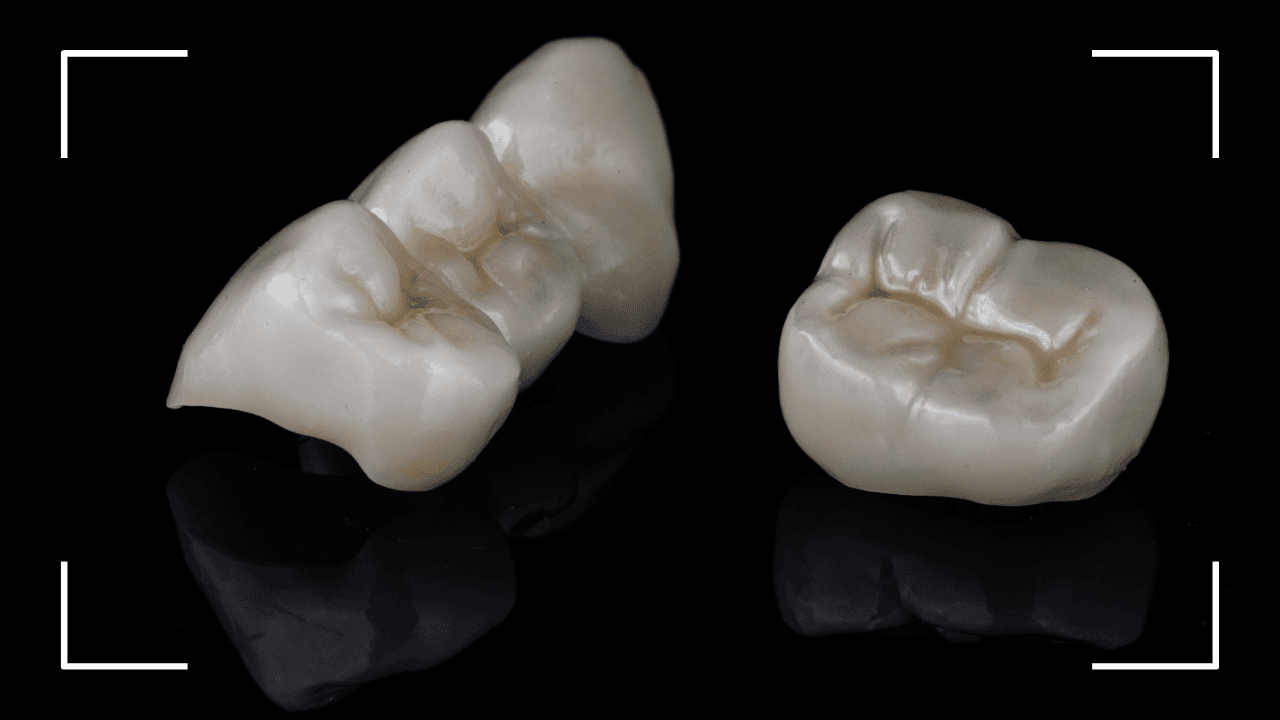
Dental crowns are caps that cover the entire visible surface of a tooth. They are used to:
Protect weakened teeth: Teeth with large cavities, fractures, or weakened by root canal treatment.
Support a dental bridge: For replacing one or multiple missing teeth using fixed bridges.
Improve appearance: To cover discolored, worn, or malformed teeth.
When to Choose Dental Veneers?
Veneers are ideal when:
- You want to improve the color, shape, or size of your front teeth.
- You have superficial stains or slight imperfections.
- You seek a minimally invasive treatment.
- You plan to be part of a comprehensive smile design.
When to Choose Dental Crowns?
Crowns are the best option when:
- You have a fractured tooth or a large cavity.
- You need a tooth to support a dental bridge.
- You have a weakened tooth from root canal treatment.
- You want to improve the appearance of a tooth that has changed in color or shape.
Placement Process
Both veneers and crowns require prior dental preparation. The dentist removes part of the dental enamel to place the veneer or crown. Then, an impression of your tooth is taken to fabricate the restoration in a dental lab. Finally, the restoration is cemented onto your tooth.
In some cases, especially with extensive cavities, dental fillings may be necessary before the procedure.
Maintenance
Both veneers and crowns require adequate care to extend their lifespan. It is important to:
- Maintain good oral hygiene with electric toothbrushes.
- Use the appropriate toothpaste.
- Have regular professional dental cleanings.
- Avoid harmful habits like biting hard objects.
- Follow care recommendations for veneers.
Materials Used
Dental Veneers:
- Porcelain: The most common material, offering excellent aesthetics and durability.
- Composite: More affordable and less invasive but less durable and more prone to stains.
Dental Crowns:
- Porcelain: Offer excellent aesthetics and durability.
- Ceramic: Similar to porcelain but may be more resistant.
- Metal-ceramic: More durable but may show a dark line at the gum.
- Zirconia: Very resistant with a natural appearance.
Learn more about available types of dental crowns in our specialized article.
Considerations Before Making a Decision
Extent of damage: If dental damage is extensive, a crown is more appropriate. For minor aesthetic imperfections, veneers may suffice.
Tooth location: Veneers typically placed on front teeth; crowns can be placed on any tooth.
Function: If functional restoration beyond aesthetics is needed, a crown is better.
Cost: Crowns are usually more expensive than veneers. Check our updated price guides.
Maintenance: Both treatments require good oral hygiene.
Additional Alternatives
For specific cases, we also offer ceramic biolaminates for ultra-conservative treatment and dental implants when the tooth cannot be saved.
Which is the Best Option for You?
The choice between veneers and crowns depends on factors including your aesthetic and functional needs, the condition of your teeth, and your budget. It is essential to consult an experienced dentist for a precise diagnosis and personalized treatment plan.
Tips for Choosing
- Look for an experienced dentist: One proficient in dental aesthetics can advise you properly.
- Get multiple opinions: Consult different dentists to compare prices and treatments.
- Don’t be driven only by price: Quality is more important than cost in the long term.
- Ask about materials: Learn about available materials and their features.
- Prepare questions: Have a list of questions ready before your consultation.
In summary, both veneers and crowns can transform your smile. The choice depends on your needs and goals. A qualified dentist will help make the best decision for you.
Frequently Asked Questions (FAQ)
- How long do veneers and crowns last?
Both can last between 10 and 15 years with proper care. Discover more about how long dental crowns last. - What is the cost of veneers and crowns?
Cost varies by material, number of restorations, and location. Check our updated price guides. - Are veneers and crowns painful?
The procedure is usually done under local anesthesia and should not cause pain. - What is the difference between a veneer and a crown?
A crown is another term for a dental cap. - Do veneers and crowns stain?
Porcelain veneers and crowns are highly stain-resistant, but composite ones may stain over time.